

Biographie
Born in 1978 Dieter De Lathauwer graduated from Académie des Arts in Ghent, Belgium. Since 2012 he has won several prizes including Bozar Photography (Summer of Photography), DocField Dummy Award in Barcelona (mention), Kassel Photobook (expert selection). His work is essentially exhibited in Belgium. He has taken part in two group exhibitions abroad : at the Contemporary Art Museum of Kanazawa in Japan an at Photo in London. He is a member of “Photolimits” collective.
Présentation
This exhibition questions the value of a person when compared to their level of utility or cost to society, and investigates the manipulative power of propaganda images. The exhibition treats the elimination of incurable physical and mentally ill patients, both children and adults, between 1939 and 1941. The killings were framed as “mercy killing” and “euthanasia” and served as a precursor for the Holocaust. In a structured and organized way over 70.000 patients were murdered in Austria. They were considered as useless to society, and so should present no financial burden on that society. In 1941 Hitler ordered the program to stop, but the institutions continued despite that. Only a few of the responsible persons were ever brought to justice.
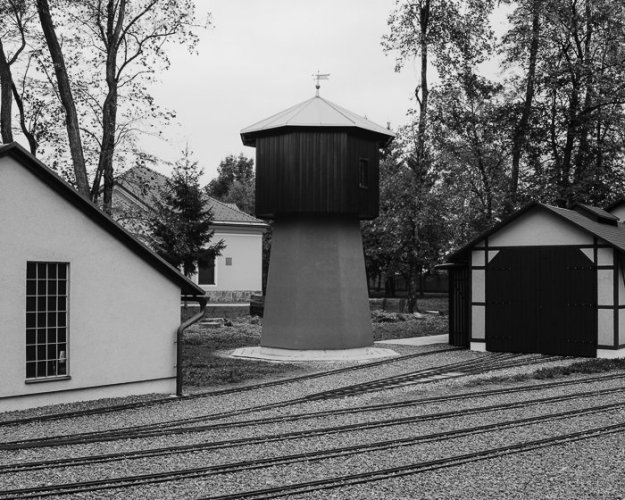
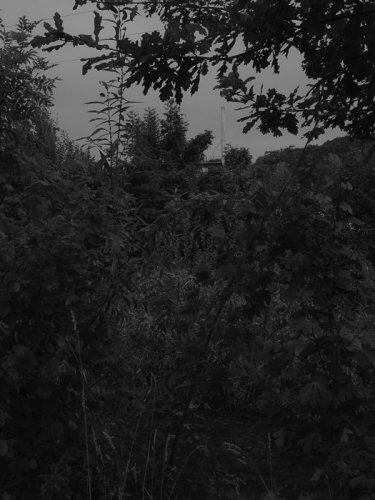
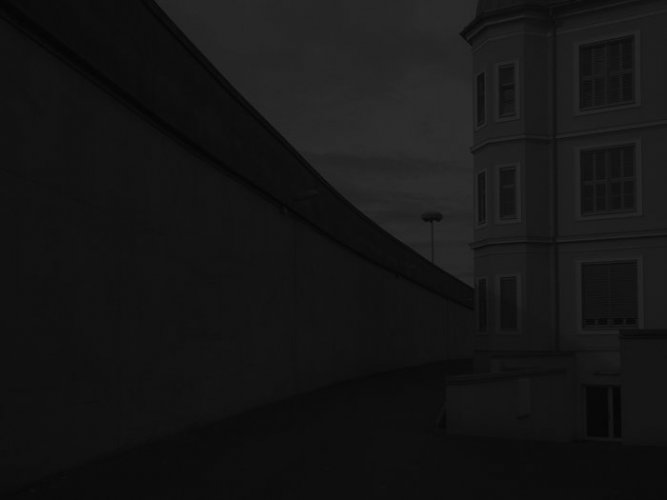
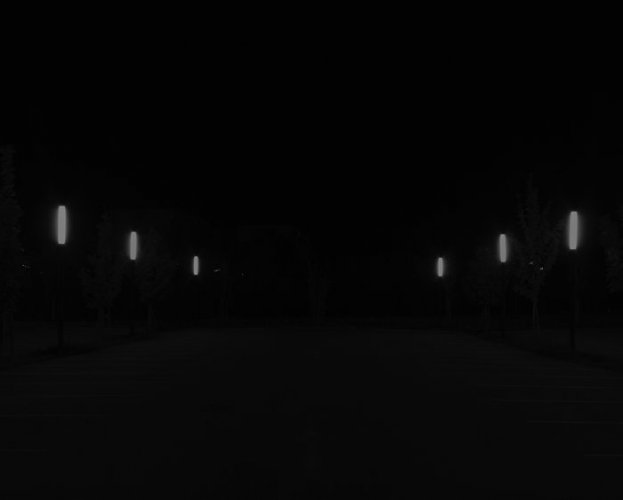
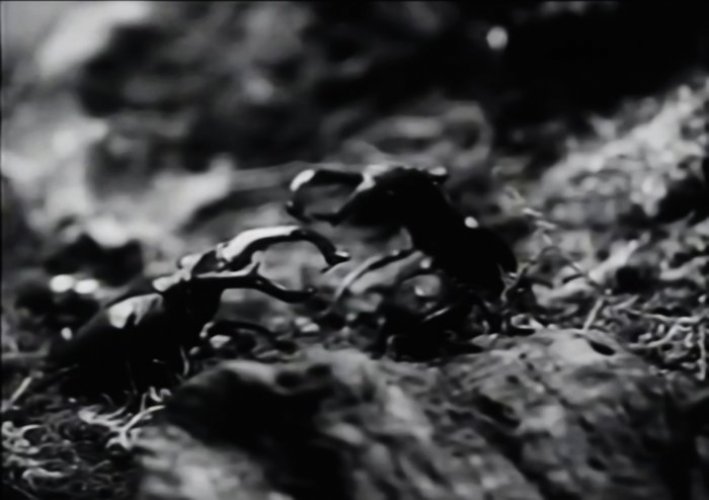
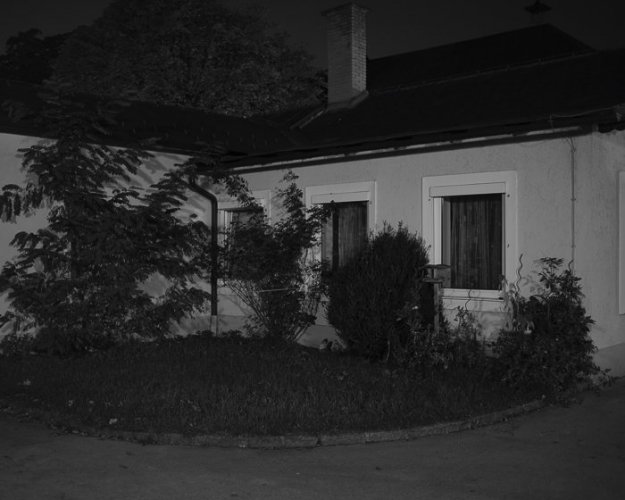
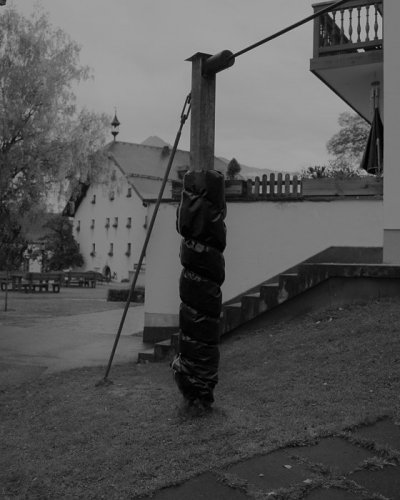
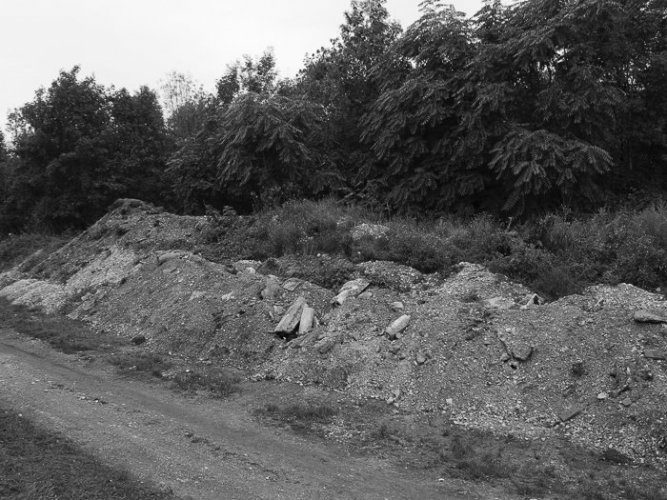
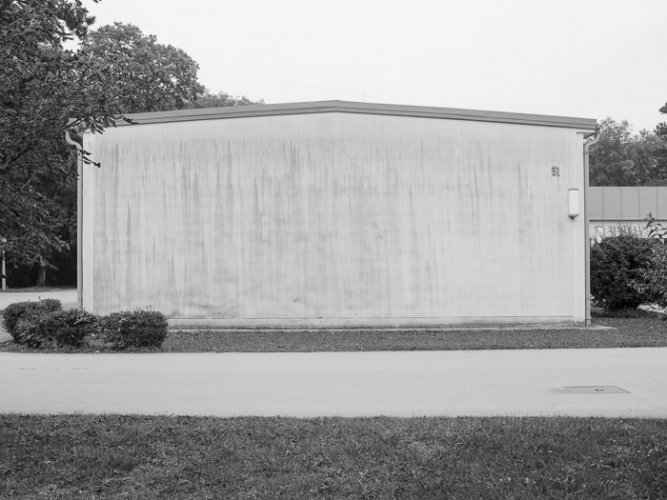
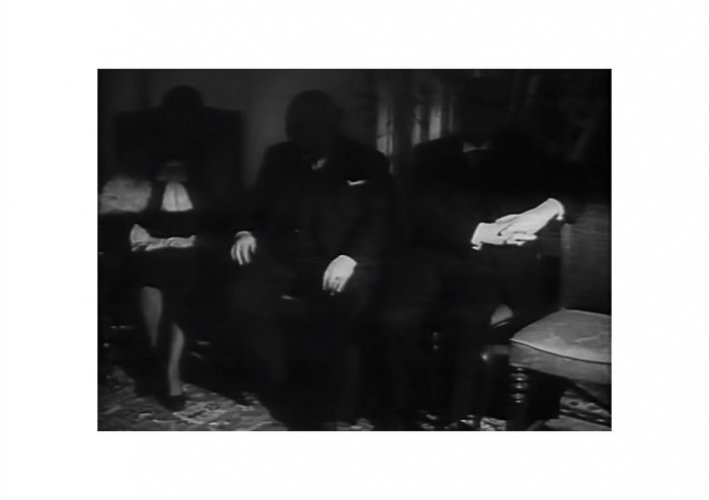
"I travelled through Austria photographing these care centres and psychiatric institutions, and I combined these in situ photographs with stills from Nazi propaganda movies on euthanasia, digital collages and photographs of historical objects. The digital collages represent some of those responsible for the assassinations, in which some facial features have been replaced by Google images of the ideal face, of perfect features, thus recalling Nazi eugenics.
The images can be read in different ways. Even though all the photographs are true, multiple interpretations and directions are possible.
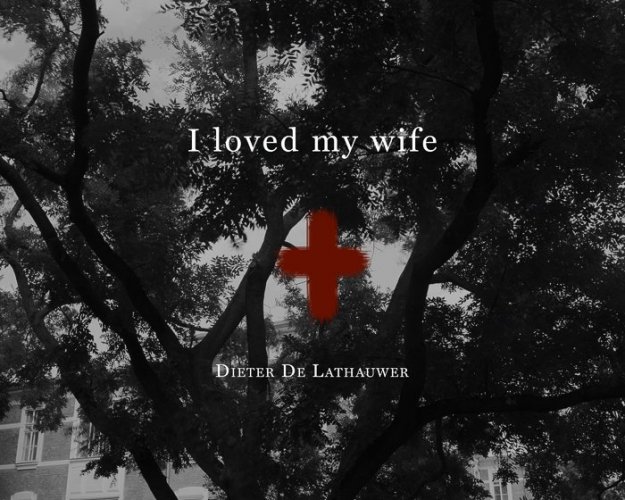
The design of the book has references to a medical file. It is packed in a pink two-pocket folder containing also a small booklet with three essays and a map. Every folder has a manually signed red cross on the cover just like the doctors did when judging someone to be incurable hence to be eliminated. The small booklet is printed on thin paper and small font size just like a medical leaflet.
The title is from a dialogue in a propaganda film where the person accused of committing euthanasia on his wife is brought to court. He stood up and said “I loved my wife” yet at the same time the underlying theme of the movie is “even though I loved my wife, killing her was the only right thing to do for the sake of the national interest”. This episode could be seen both as a family drama and an apology for Nazi eugenics.
This project brings together several of my interests in photography: the exploration of places through social and historical blind spots, how people understand the photographs within their environment, and the photobook as an object in its own right".