Biographie
Born in 1976, Alexandra studied documentary photography in Newport, Wales, for three years. During her training, she was greatly influenced by this new form of photography, which places a strong emphasis on subjectivity within the documentary approach. In 2003, she joined the Transit collective based in Montpellier. For the past twenty years, she has lived and worked in Occitanie. As much as photography, she loves meeting people, dissecting their daily lives, and the ordinary things that shape their world... People are very often at the center of her work. She cultivates a personal style across long-term projects at the regional, national, and international levels. These projects often involve other professionals in fields as varied as graphic design, publishing, video, sound, and event production. Her work has frequently been recognized with awards and supported by the DRAC and the Occitanie Region. Her images are regularly exhibited (along the banks of the Seine in Paris for the Hyperfestival, at the Third Floor Gallery in Cardiff, and at the C.R.I. des Lumières in Lunéville)... She also participates in artist residencies: in Casablanca with the Institut Français, and with Occitanie Film to offer a perspective on locations in the Occitanie region... At the same time, she regularly collaborates with the national press, associations, and cultural organizations. Education is also part of her activities: school visits, workshops with students...
Présentation
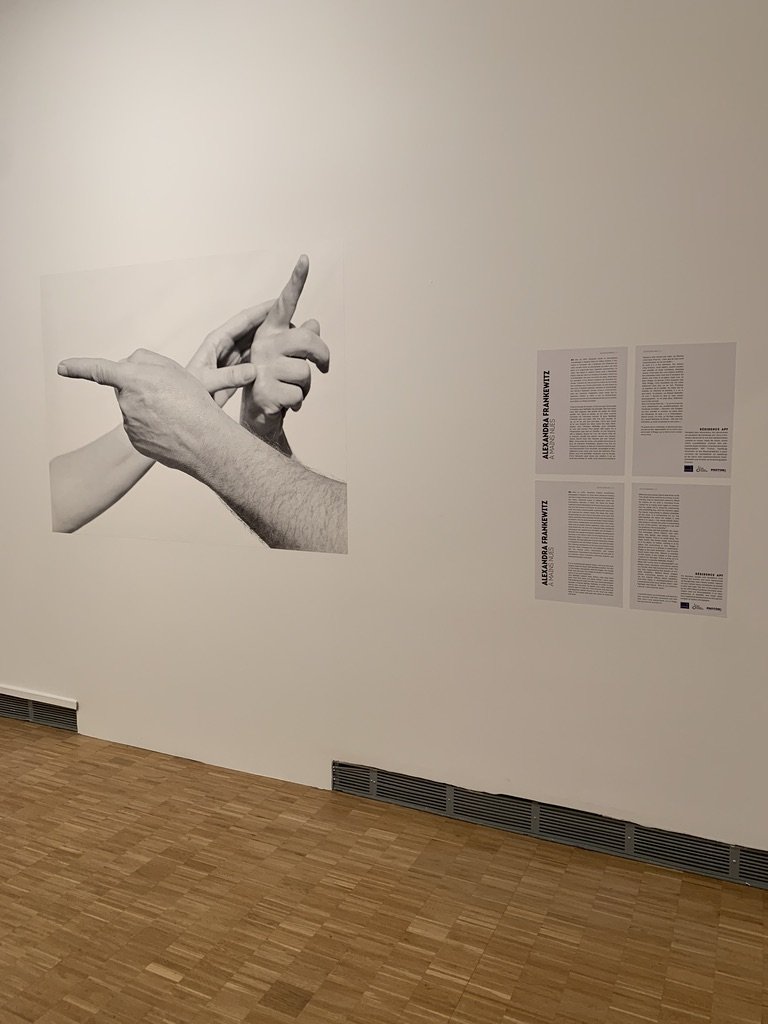
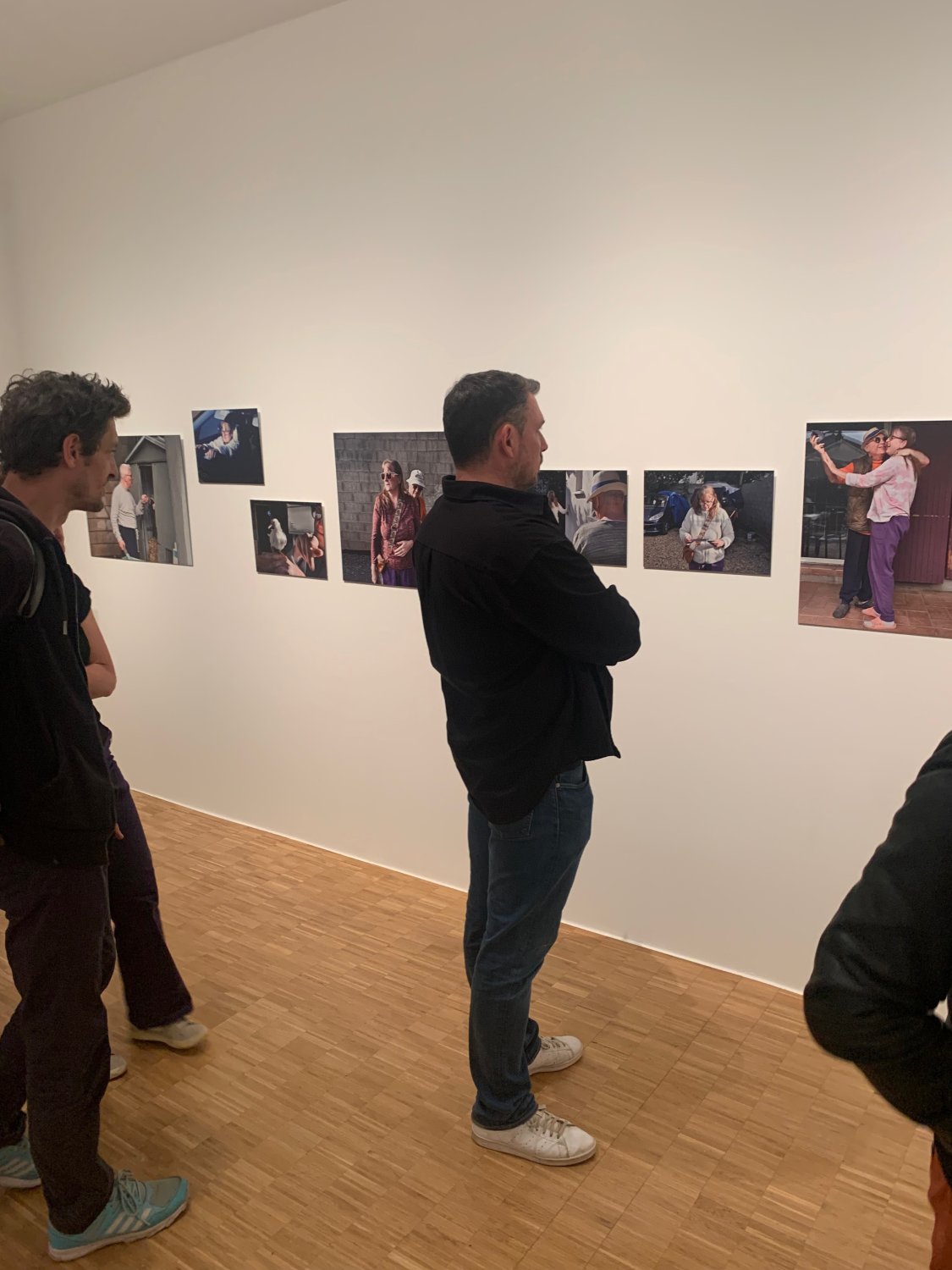
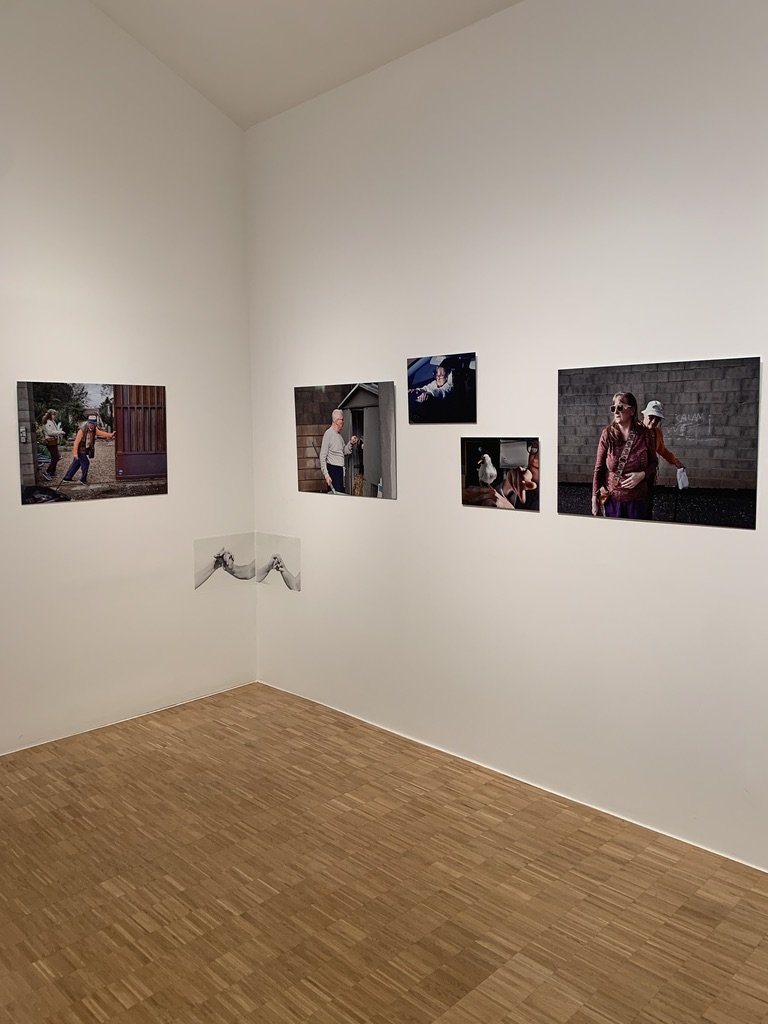
It’s a topsy-turvy world. I’m the one who can’t seem to show that Nathalie is blind. Yet she is. She looks around, she points. It looks like she can see. So I start to doubt myself. I feel like the one who’s been hoisted by her own petard. And then Nathalie can’t hear either; she was born deaf. And that isn’t obvious either. I read that hearing and sight are the two most developed senses in humans. To hear and see, Nathalie touches. To speak, she signs. It feels like nothing can stop her. I turn around, and she’s gone. David yells to me from the other side of the house that she’s gone to feed the chickens.
When he was young, David was hit by a car. The result: three months in a coma, a crooked leg, and no short-term memory. When he stares at me, furrowing his brow, I know he’s trying to remember my name again. He’s smiling, welcoming, and unsettling too, with his memory lapses. For David, anything is possible, always, all the time. It’s exhausting for us, the able-bodied. He doesn’t realize it. And there you go—the world’s upside down again. One thing is certain: his wife is everything. For him, “as long as I’m with my princess, life is beautiful.”
And then there are the animals. 6 dogs, 5 turtles, 3 rabbits, 4 chickens, a gerbil, and 11 doves—almost 12. That’s no small thing. The dogs are snoring, the doves are cooing, everything is in its place. Or rather, nothing is in its place, but everything is fine. Peggy is about to arrive. It’s always a celebration. Peggy is the caregiver, but so much more than that, really. Almost a member of the family. In the midst of this world, I’m searching for light. There isn’t much of it in the house; it’s blinding Nathalie. Really?
What did I come here to photograph? I don’t know anymore; everything seems so normal. Alex had told me: “You’re fully experiencing the challenges of an invisible disability.” Behind these images where everything seems so normal, we’re really talking about disability. And then there’s interdependence, too. I truly understood that word when I saw Nathalie and David. “She is my memory; I am her voice and her eyes.”
A big thank you to Nathalie and David for their hospitality and their time.
And a special thank you to Peggy, who served as the bridge between us.