
Biographie
Photographer and trainee architect, Camille Gharbi evolves in the fields of portraiture and architectural photography. She has several exhibitions to her credit since 2015 with her series “La traverse” at Immix Gallery (Paris), a collective exhibition called “Résonances” at Rencontres Photographiques du 10e (Paris), “The Waiting Room” at La Maison des Photographes (Paris) and “Lieux de Vie” at Moulins Albigeois (Albi).
Présentation
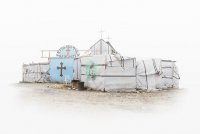
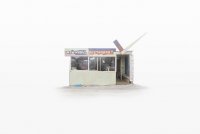
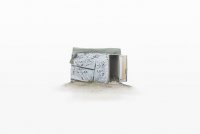
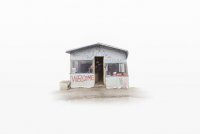
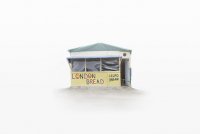
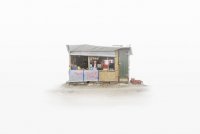
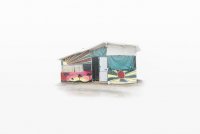
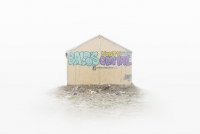
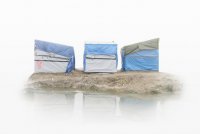
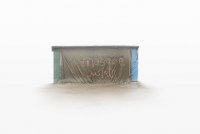
These images were made in the spring of 2016, in what was called the Calais Jungle. They show some of the constructions existing at the time in the Lande camp, which housed several thousand asylum seekers, and which was demolished on the orders of the Interior Ministry in the autumn of 2016.
The constructions shown here are decontextualised. They are isolated from their environment, which has focalised the media for so many years; upon which so much has been written, read, shown, observed, and finally, for want of better, destroyed. Perhaps in order to no longer see it.
These constructions appear here, in front of us, removed from the pandemonium of daily life. They no longer tell of an inextricable situation, they are no longer the symbol of a world crisis or a predicament that we don’t know how to resolve. They are simply here, and speak only for themselves. They attract our attention. Violently sometimes, but with humour also. Over and above the clichés, the desolate representations, the prejudices that we associate with this particular world that is the Calais Jungle, they demonstrate the formidable resilience shown by those who built them. They speak of lives in the process of reconstruction, of ingenuity, hope, mutual help, cooperation, suffering and optimism.
They speak to us, quite simply, of the desire to live, and the force that can come from that. Something that, in another context, we would have perhaps more readily seen.
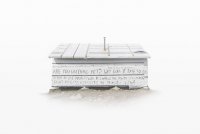
NB: In February 2016, the Administrative Tribunal of Lille validated the principal of the evacuation of the southern part of the Jungle. However, the judge noted the installation of « living spaces », created by the migrants, « which are necessary, and to which they are attached, in particular for cultural reasons » Consequently the judge decided that the evacuation order should not include these « living spaces ».
In consideration of this judgement, migrants and welfare associations wrote on a large number of cabins, shacks and other constructions housing refugees, the words « living space ».