Biographie
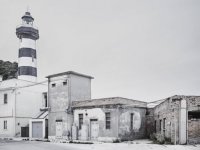
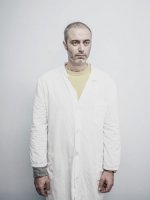
Carlo Lombardi was born in 1988 in Pescara, Italy. He’s a freelance photographer and work on long-term projects. He starts to work on his “Dead Sea” project in 2016 and exhibits it since 2017. This series allows him to be selected by festivals and win several prizes like the first prize at the FotoLeggendo 13rd edition, the second prize at SI Fest Portofolio’s 26th edition.
Présentation
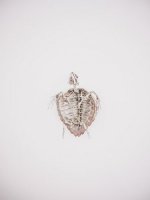
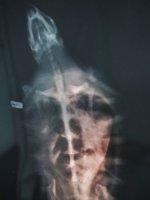
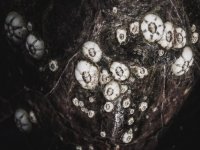
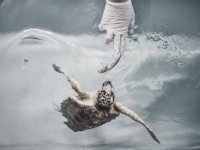
The loggerhead sea turtle (Caretta caretta) lives in oceans and seas all over the world, but prefers breeding in temperate and subtropical regions. Since 2015, Caretta caretta has been included on the Red List of the IUCN (International Union for the Conservation of Nature) as a vulnerable species, subject to extinction. Scientists believe that the world population of this species is decreasing.
These animals are very fragile and suffer from the consequences of various human activities. The exploitation of the coastlines, which generates artificial light perturbing the breeding areas, global warming (the increase of the sand temperature inside the nests affects the sex of the embryos), pollution and accidental capture are the main threats to this species.
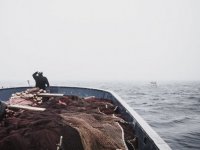
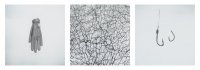
The under population is especially notable in the eastern part of the Mediterranean area, while few nests are recorded in the western part. Each year, about 150,000 turtles are accidentally captured. They are principally victims of indiscriminate fishing, with nets and baits, static lines, trawls and bottom gill nets. For their part, 40,000 deaths can be attributed to deliberate fishing or to collisions with boats or the ingestion of plastic material.
Even if man, in these circumstances, appears as a persecutor, he also disposes of all the means to put an end to this massacre. Networks of professionals (doctors, vets, biologists, marine biologists) voluntarily and constantly carry out various research activities, surveys and awareness campaigns. Each year, thanks to their involvement and collaborative work, hundreds of specimens are saved and released back into their natural sea habitat.